
Tornado Damage Repair
Tornado Damage Roof Repair in Pittsburgh, PA
Tornado damage to a commercial roof in Pittsburgh can involve the membrane, insulation, deck, parapets, rooftop equipment, and the building's structural load path. We begin with safe access, temporary water control, and a documented roof-zone assessment before permanent repair is priced.
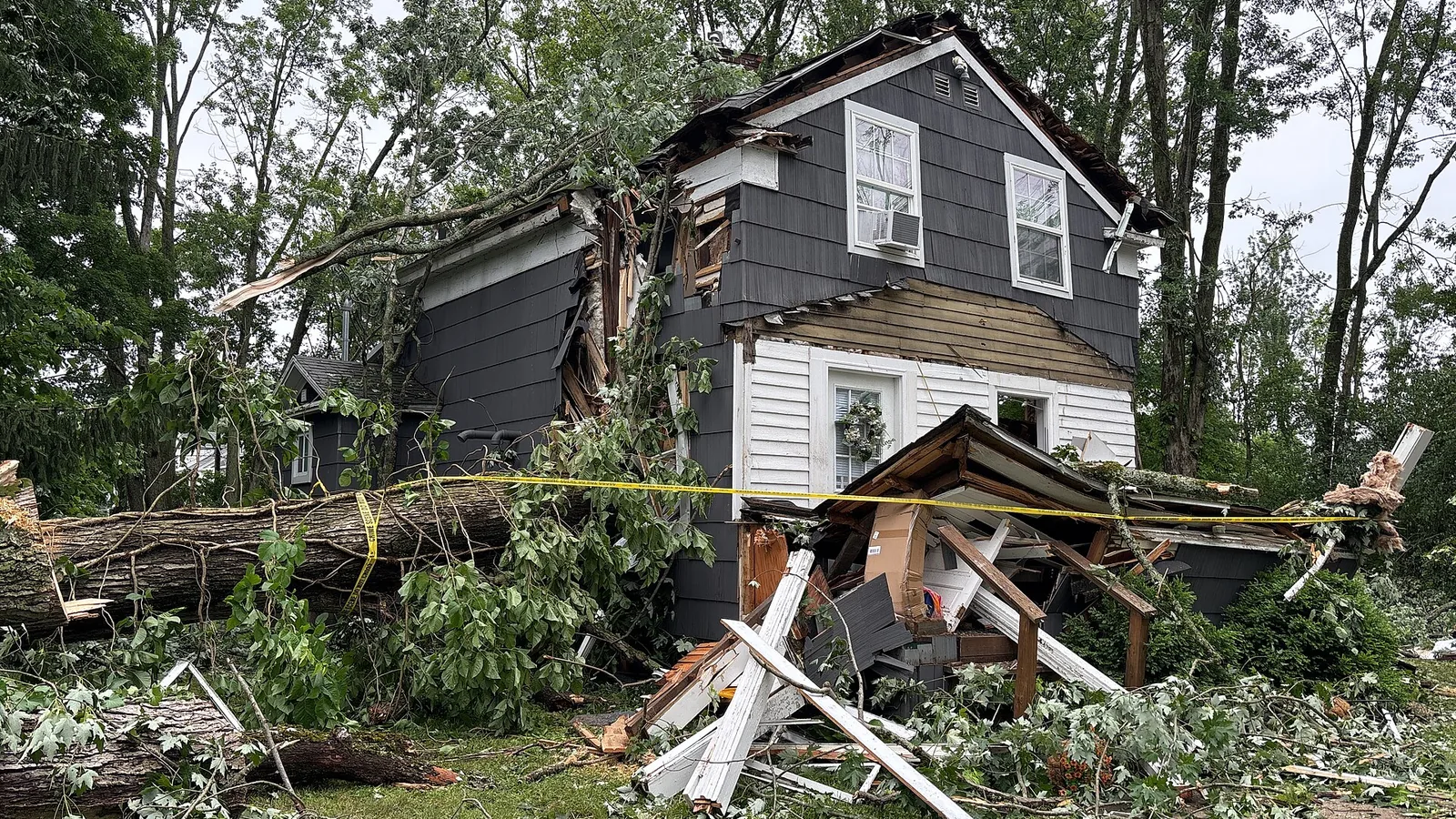
Why rotational wind changes the roof assessment
For Pittsburgh's river valleys, industrial sites, healthcare campuses, offices, warehouses, and hillside commercial districts, the assessment must fit the property rather than a generic storm checklist. Older industrial deck, masonry walls, built-up roofing, single-ply recover systems, and rooftop equipment need separate checks for uplift, impact, movement, and hidden moisture. We map findings by roof area and component so an owner can distinguish a local membrane repair from a deck, edge, equipment, or enclosure problem.
Western Pennsylvania tornadoes are less common than routine windstorms but can create a concentrated damage path across complex terrain and developed valleys. The first exterior view can understate the problem. Rotating wind may load opposite roof edges in quick succession, while debris creates punctures far from the most visibly damaged elevation. Water then travels through insulation flutes, deck seams, conduits, or ceiling systems before appearing inside.
Once access is cleared, documentation should preserve the original condition before debris removal and temporary work change the scene. We record overview photographs, close details, roof-zone orientation, punctures, open seams, displaced flashing, fastener pullout, membrane movement, equipment damage, drainage obstruction, interior water, and any area that cannot yet be inspected safely.
Roof access begins from the ground and interior. We look for displaced walls, dropped deck, deflected framing, unstable parapets, hanging materials, energized equipment, and openings that make the walking surface uncertain. If structural damage is suspected, a qualified structural engineer defines safe access and the structural repair boundary. Roofing work waits for that decision.
Stabilize water without hiding the damage
Steep access, bridges, dense sites, active manufacturing, and medical facilities influence crane use, staging, and the order of stabilization. That is why the response plan identifies access, shutoffs, interior protection, tenant communication, staging, daily dry-in limits, and weather stops. The roof scope and the operating plan have to agree before materials are removed.
Emergency work has a narrow purpose: stop additional water entry and reduce immediate exposure. Tarping, temporary membrane, drain clearing, and controlled closures should be located and photographed. A temporary patch should not cover a suspect deck connection, wet-insulation boundary, or structural opening before those conditions are measured.
Moisture investigation may be needed beyond the visible opening. Water can spread laterally through insulation or follow deck flutes away from the impact point. Infrared scanning, capacitance testing, core cuts, or test openings are selected according to the assembly and conditions; no one method should be treated as proof by itself.
From field notes to a buildable recovery scope
The permanent scope separates confirmed damage from open questions. It identifies deck replacement, insulation removal, membrane and flashing work, edge metal, curbs, penetrations, drainage, equipment coordination, code-required upgrades, testing, and closeout documentation. Quantities should trace to roof zones and field evidence instead of a single lump-sum description.
Repair, restoration, recover, and replacement remain options only until field evidence rules them in or out. A sound deck with concentrated damage may support a defined repair. Widespread deck loss, displaced attachment, broad moisture, incompatible materials, or code-driven assembly changes may require a larger project. The recommendation should state what was observed, what remains unknown, and what assumption changes the decision.
Insurance documentation should stay technical. We provide photographs, measurements, observations, temporary-work records, and a roof repair or replacement scope. We are not public adjusters and do not interpret coverage, negotiate the settlement, or promise an outcome. The owner and licensed insurance professionals handle those decisions using the policy and the documented building condition.
Tornado roof damage questions
Is it safe to walk a Pittsburgh commercial roof after a tornado?
Not until obvious structural hazards have been ruled out. A displaced deck, deflected framing, unstable parapet, loose equipment, downed electrical service, or debris can make roof access unsafe. Structural concerns should be cleared by a qualified engineer or the appropriate authority before roofing crews proceed.
What gets documented before emergency repairs begin?
When conditions permit, the record should include wide and close photographs, roof-zone locations, damaged edges and flashings, punctures, displaced equipment, visible deck conditions, interior water, temporary-work limits, and the date and time of each observation.
Can the roof be patched immediately?
Active water entry may require temporary dry-in, but a permanent patch should not conceal deck, insulation, attachment, or structural damage that still needs investigation. Temporary and permanent work should be written as separate scopes.
Does the roofing contractor handle the insurance claim?
No. We are the roofing contractor, not a public adjuster. We inspect the roof, document physical conditions, measure repair quantities, and prepare a technical scope. Coverage decisions and claim negotiation remain with the owner and properly licensed insurance professionals.
How do you decide between repair and replacement?
The decision follows structural condition, deck damage, wet-insulation extent, membrane age and compatibility, attachment, code requirements, warranty terms, repair concentration, operating constraints, and the cost of a complete durable scope.
Request a Pittsburgh Tornado Roof Assessment
Share the building address, what is visible inside or outside, and whether water is active. We will help establish a safe inspection and stabilization sequence.
Request a Roof Review